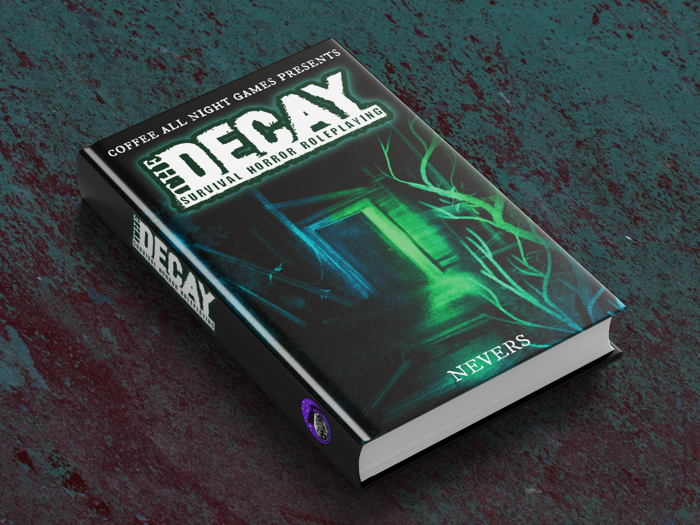
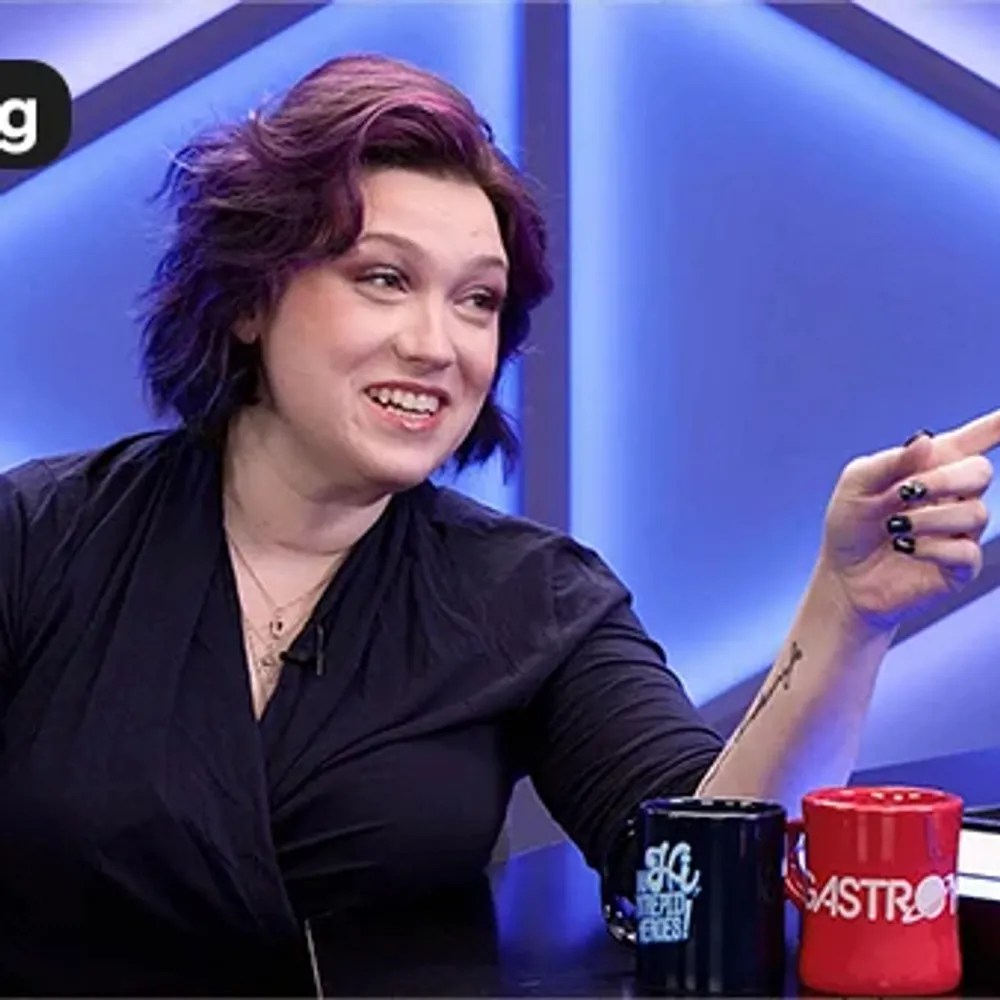
Dillin Apelyan, James D’Amato, and The Ultimate RPG Villain Backstory Guide

The Ultimate RPG Episode: Making Better Villains with James D’Amato and Dillin Apelyan

This week we’re joined by Dillin Apelyan and James D’Amato. If you listen to the One Shot Podcast, you’ve probably heard of both of them, and if you’re a fan of the actual play scene in general, you’ve seen their work all over. And now, they’ve come on to the show to discuss their brand new book.

Dillin’s been featured on Dropout, Critical Role, and podcasts across the space. They’ve designed a bunch of great games as well, including the HUNT(er/ed) and Neverland: The Impossible Island. You can find out more about Superdillin here

James has been working in both the comedy and TTRPG scene for years. He’s the creator of the One Shot Network and the author of the Ultimate RPG book series, which is an absolute masterclass in breaking down the genre for players and Game Masters alike. You can find his books here!

The pair are more than just integral parts of the community today–they’re good friends, and even better podcast guests. The episode was a blast, breaking down their experiences and talking in depth about their new book, The Ultimate RPG Villain Backstory Guide. They dive deep into gaming culture, their GMing experiences, and provide a lot of insight into how you can build better NPCs and characters.

Listen on your favorite podcast platform or HERE!

Laurence Phillips (Il Fantasma del Giallo)

Listen HERE

Today we sit down with Laurence Phillips of Hardy Roach Games, an independent designer who creates unique games that focus on themes that dive deeper than your average TTRPG.  His one-page games are weird and exciting to play, and now he discusses his brand-new game, Il Fantasmo del Giallo. 

Step into the world of Giallo, a 20th-century Italian film genre that focuses on switchbacks, misdirection, and mile-high stakes. Il Fantasmo del Giallo is a cinematic, dark, brooding game that focuses on narratives and scenes more than a traditional dice-roller. Drama, Mystery, and Mortality are the main words of the game, and it’s an excellent example of the doors that have opened in modern roleplaying. Trauma decks, scene work, and avant-garde lenses to play make for a new take on an old genre.  

Il Fantasmo del Giallo Kickstarter

Hardy Roach Games

His Website

 Mentions

 Star Wars Visual Magazine

 Call of Cthulu

 Warhammer Fantasy Roleplay 

 Bird with the Crystal Plumage

 Blood and Black Legs

 Lovecraftesque by Black Armada

 Suspiria

 Halloween

 Giallo Genre

 Sherlock Holmes

 Vangers: One For the Road

Interview with Ray Chou (Mythworks)

Ray Chou is a comic book and TTRPG creator–one of the talents behind the amazing Mythworks team, known for some of the last few years’ most anticipated games–Wildsea, Slugblaster, Pico, and a whole lot more. Their studio defines the modern age of TTRPG development, and he walked us through his experience and process, offering a lot of insight into how it all works.

Today’s episode focuses on Ray’s unique experiences breaking into the industry and a close look into what it means to work in the high-level indie space. Ray broke into game writing at a pivotal point in the industry. It was before the medium really blew up, but recently enough to ride the wave of Kickstarter just as it was beginning. We also talked in depth about Mythworks and how it operates as an organization, leveraging the team’s creative strengths to create indie work that feels like blockbuster TTRPG gaming. 

Chapter 3: Weatherstone

To read the entire series – check for chapters HERE!

A tale from the Forbidden Lands

I. Three Dwarves

They left the Hollows in the early morning of the fourth day of spring, before the town was properly awake.

The decision to go was not difficult. They had found what they came for — another settlement, proof that the world beyond Oakenheart was inhabited and navigable — and now the Hollows had begun to feel complicated in the way that all places feel complicated once you know enough about them. There were the dead that walked at night and required a spoken ritual to discourage them. There was the brewer who was not what he claimed to be, and the village elder who wanted more than her share of everything that moved. There was the Rust Brother, tall and dark-cloaked, who had looked at Yawin with a private significance that none of them fully understood and did not particularly want to. The Hollows was a fine town. It was time to leave it.

The river ran east from the Hollows and then bent south, opening into a lake — wide and silver in the morning mist, the water steaming faintly in the cool air. The road that had led into town slowly became a trail, and the trail slowly became nothing. They followed the north shore, Sten a few steps ahead as always, Aldric’s eyes moving in their habitual sweep.

Aldric was not at his best. Something about the walking — the progressive distance from everything familiar, the way each day added another layer of country between him and the life he had known — pulled his mind back to his father. To the man who had returned and sat in the house, staring at the walls. He watched too much and saw too little, his attention scattered across too wide a field, catching at everything and fixing on nothing. He was jittery in a way he did not want to name.

It was in this state — distracted, too wide open — that he and Sten came around an outcrop of rocks at the lakeshore and found themselves face to face with three dwarves.

They were packing up a camp. Bedrolls, a small cooking fire still smoking, three sets of heavy packs, and three axes worn at the belt with the ease of long habit. They were broad and low and deliberate-looking, and the moment they saw Sten and Aldric, they rose and reached for the axes, and one of them said, in a voice that expected an answer:

“Who goes there?”

Sten, who had never been good at the opening exchanges of conversation, said they were travelers from the Hollows, about an hour back along the river. He said it with his hands where they could be seen and his bow undrawn, which was, for him, the fullest available expression of peaceable intent.

“You were at the Hollows,” the foremost dwarf said. His eyes were already doing the kind of thinking that precedes a question rather than follows one. “Was there a dwarf there? Brewing beer?”

Osric arrived at this moment with Vasilla, drawn by the voices. The four of them stood in a loose line, and the three dwarves stood in their own loose line, and the morning mist came off the lake, and the situation balanced.

“There is,” Osric said carefully. “Though he does not think of himself as one.”

The foremost dwarf turned to the second and said, with satisfaction, that had been a long time building: “I told you. I told you he was close. He is going to pay for all of it.”

They were not interested in elaborating on what it all was. They asked about the brewery’s location, its layout, and whether Yawin kept guards. Sten said he ran a tavern and kept boys. He said it the way you say something when you are answering the question asked, but not the one behind it. The dwarves seemed to accept this.

They packed the last of their camp, said travel well, and began walking toward the Hollows.

The four of them stood and watched them go.

“They are going to kill him,” Osric said.

“That seemed to be their intention,” Sten agreed.

A silence.

“He gave us breakfast,” Vasilla said. “And beer. And let me perform.”

Another silence, shorter.

“All right,” Osric said. “Let’s think about this.”

* * *

II. The Cemetery Plan

The plan, as it emerged, was Vasilla’s.

This was not immediately apparent. It began as a loose and anxious conversation about what could possibly be done: the dwarves were armed, there were three of them, catching them before they reached the Hollows would require moving faster than was comfortable, and the whole business was, as Sten pointed out, not strictly their problem to solve. Yawin had his own history with these men, his own reasons for whatever had brought them to this lakeshore, and strangers inserting themselves into a dwarf’s private accounting with another dwarf was the kind of thing that tended to create more trouble than it resolved.

All of that was true. None of it settled the matter.

What settled it, in the end, was something simpler: Yawin had been kind to them. He had fed them without being asked, given them the first round for free, and talked to them like people, which was more than the last strangers they had met had done. Whatever he owed these three dwarves, he had earned the right to be warned.

The question was how. Sten and Osric would run ahead — overland, staying out of sight, using the rolling hills and rock outcroppings to keep themselves hidden while the dwarves followed the river path. Vasilla and Aldric would fall behind, then catch up to the dwarves, slow them down with conversation, and buy time. Fifteen minutes. Half an hour. Enough for the older men to reach the Hollows and warn Yawin before three axes arrived at his door.

That was the first plan. It was a reasonable plan. The second plan was better.

Vasilla was explaining to the dwarves — earnestly, with the sincerity that only a good liar can fully commit to — that she had not been entirely honest with them. That Yawin, it turned out, had guards. That there was a Rust Brother involved who was close with him, and that walking up to the Three Skulls in broad daylight would end badly. She watched their faces as she said it. The foremost dwarf’s eyes moved to the other two, and there was a small silence, and then he said they would pay two gold for Yawin to be lured out of the Hollows entirely, to some place where the business could be conducted without the whole town watching.

Vasilla thought about this.

“Actually,” she said, “I have a better idea.”

The cemetery at the north end of town, she explained. Overgrown. Abandoned. Nobody went there. And nobody, she added — carefully, precisely — went outside at night.

She watched the dwarf work out what she was not saying. She watched him understand that an abandoned cemetery in a town where the dead walked at night was not a meeting place. It was a disposal.

She did not say this. She let him arrive at it himself.

“We will wait there after dark,” the dwarf said. “One hour after nightfall. Bring him to us.”

“Understood,” said Vasilla.

Aldric, walking beside her, said nothing. He was looking at the ground.

* * *

III. A Fine Plan

Sten and Osric reached the Hollows well ahead of the dwarves.

They crossed the wall at the same low section as before, stepped past the same gardens and chicken coops and shuttered windows, and nodded to the innkeeper of the Dead Man’s Hand, who waved from his porch and asked if they needed a room. They said they would let him know and kept moving south to the bridge, across it, down the bank to where Yawin stood on the dock, directing two boys with barrels.

He had his back on them. He was in the middle of a sentence when Osric said his name.

Yawin turned. He read their faces before they spoke.

“Inside,” he said. He sent the boys to the brewery, closed the shutters, and latched the door. In the dim interior of the Three Skulls, with the remains of the morning fire still glowing in the pit, Osric told him about the three dwarves on the lakeshore. Yawin’s face went through several expressions quickly, then went still.

“How much time do I have?”

“Half an hour. Perhaps less, depending on how well the others slow them.”

Yawin went behind the bar and came back with a dwarven battle axe. It was a good axe, well-maintained, carried like something that had been used before and was expected to be used again. He held it and seemed to weigh the situation the same way he was weighing the axe.

“They will not stop at a warning,” he said. “I know these men. Dwarves hold grudges the way stone holds cold — a very long time and very deep. They will not be satisfied until one of us is not standing.”

“Then we go out to meet them,” Osric said. “Before they reach the gates. Five of us, three of them.”

Sten, who had been calculating quietly in the background the way he calculated everything, said nothing. He thought about the axes. He thought about the distance, the open ground, what he could do with a bow at a hundred yards, and what three dwarves could do with three axes at arm’s length. The arithmetic was not comfortable, but it was not hopeless either.

Yawin was nodding, the decision already made, the axe already in his hand. He pulled five silver coins from a box behind the bar and pressed coins into each of their palms.

“If we survive this,” he said, “the debt is beyond silver. But silver is what I have at the moment.”

It was at the eastern gate, while Sten and Osric stood waiting and watching the road, that Vasilla and Aldric came through. And Vasilla explained the plan.

Yawin listened to all of it without speaking. When she finished, he looked at Sten.

“I like her,” he said. “She has much better plans than you.”

“She is welcome to all the plans she likes,” Sten said. “I just want to go home.”

They walked back to the Three Skulls, closed it up, and waited for dark.

* * *

IV. Walking in Peace with the Dead

The evening came slowly, the way spring evenings do — light going out of the sky in stages, rose giving way to blue giving way to the darkness that falls over a town that is mostly indoors and mostly quiet.

Yawin shuttered the Three Skulls and put out a Closed sign and cooked another pig, mostly because cooking was the only thing that visibly settled him. He paced. He checked the axe. He asked twice whether they thought the plan would work, and both times received the kind of answer that people give when they are not certain but feel that certainty is called for.

An hour after full dark, Vasilla and Aldric walked out of the Three Skulls and across the courtyard toward the cemetery. The bell was rung — loud, deliberate, the words spoken clearly: walk in peace with the dead — and then rung again for good measure, the sound rolling out across the quiet town and fading into the marshland beyond the northern wall.

Sten and Osric took a position at the back of a house near the northern perimeter. From there, they could see the cemetery wall: old stone, half-collapsed, mostly covered in years of unchecked growth. The graves beyond were invisible in the dark. No lanterns, no torchlight, no sign of movement.

Then one lantern. Low and careful, coming from the northeast, moving along the outside of the wall. The dwarves, staying in shadow, their light shielded.

Sten watched them find the gap in the wall and cross it. He watched the lantern disappear behind a mausoleum — roofless, broken, the upper half long since fallen into rubble. He watched the light go out as they doused it, waiting in the dark. He could hear, very faintly, the sound of two axes resting against stone.

Then, from the far side of the mausoleum, something pulled itself out of the ground.

It was not fast. It was methodical — one hand finding the wall, then the other, then the weight of a body following. And then a second shape, lower and slower, rising from the earth with the greenish fog that seemed to accompany these things, an emanation that had no heat to it, only light, only the cold suggestion of something that should not be moving but was.

The shapes went around opposite sides of the mausoleum. There was a sound of axes hitting stone, wild, desperate, and then a brief and terrible scuffle, and then silence. The kind of silence that is different from quiet.

One of the shapes came back around the mausoleum. It was missing an arm. There was fresh blood on what remained.

Sten and Osric walked back to the courtyard with deliberate unhurriedness, ringing every bell they passed.

“That was a clever thing you did,” Sten said to Vasilla, when the four of them were together again in the lamplight by the well. He paused. “Also, a horrible thing.”

Vasilla was quiet for a moment.

“I didn’t kill them,” she said. “I just told them to stand in a particular place at a particular time. The dead did what the dead do. That’s not the same thing.” She paused. “Is it?”

Nobody answered right away.

“Whatever it is,” Osric said finally, “we helped someone who helped us. That much is clear.”

“Let’s not make a habit of it,” Sten said. “The cemetery part specifically.”

The door of the large building across the courtyard flew open. An old woman came out with a lantern and a cane, squinting into the dark. Behind her, filling the doorway, stood the Rust Brother — tall, black-cloaked, a rusted metal necklace catching the lamplight. He said nothing. He was the kind of person who did not need to.

Yawin appeared, steered them all toward the gate with a cheerful speed that did not invite argument, pressed the remaining silver into Vasilla’s hand and their hands while the Rust Brother’s attention was on the cemetery wall, and said, in a voice just below carrying distance:

“Go. I will clean up. You were never here after dark.”

Vasilla looked at the silver, looked at the gate, looked at Yawin.

“The dwarves said they would pay five gold each if we brought you to them,” she said.

Yawin stared at her.

“I’m telling you this,” she said, “not offering it.”

He laughed — a short, quiet, genuine laugh — and waved them through the gate.

* * *

V. The War Horse

They camped at the lake that night, a mile east of the Hollows, where the water was still, and the stars came out clean between moving clouds.

Vasilla played softly for a while and said almost nothing. She had been composing a ballad about Sten in her head for three days now — the Ballad of Sten the Merciless, who slaughtered hundreds and whose arrows found you before you knew he had drawn — and it was coming along well, but tonight she set it aside and played something older, something her mother had taught her, and let it go where it wanted to go.

Aldric kept watch and sat with his gloves off, reading the runes that had formed on his palms the way you read marks in wood grain — following the lines, trying to understand the pattern they described. They were not painful. They did not glow. They were simply there, and every day they were a little more legible, and he still did not know what they said.

They broke camp in the grey early morning and followed the river east.

It was Aldric who saw the horse first.

On the south bank, a hundred yards ahead, a large animal stood drinking from the river. Large was an understatement — it was taller at the shoulder than any horse Aldric had seen in Oakenheart, by a significant margin, and as they got closer, the details resolved: armor on the upper shoulders, a steel plate on the nose, saddlebags that sat heavy and low. A war horse, trained for combat. And riderless.

The horse put its head up when it noticed them. It did not run. It stamped and circled and kept its eyes on them with the white-rimmed agitation of an animal that had been through something it did not understand and was not yet over.

The river here was perhaps twenty feet across, not deep. Osric waded in without much deliberation, feeling for the bottom with each step, talking to the horse in a low, continuous voice — easy, easy, where is your rider, I am not a threat — making himself as legible as he could to an animal that had learned to read threat the way soldiers learn to read it. At its deepest, the river came to his shoulders. The horse held its ground, circling and nervous, but did not bolt.

He reached the other side and stood with one hand out, and the horse, after a long assessing moment, let him touch its face. Its skin was trembling under his fingers. Not cold — nerves. Whatever had happened was recent.

He fed it an apple. The horse ate the apple with an urgency that said it had not eaten in some time, and after that, it was somewhat better.

Sten crossed on his own, keeping his footing by reading the riverbed the way he read everything — slowly, with attention, using his knowledge of how water moves over stone to find the places where the bottom was solid. He made it across, dry above the waist, and spent a few minutes reading the ground around the horse, crouching at the prints, running his thumb along the edge of the deepest ones.

“It came from the northeast,” he said. “Following the south bank.”

Osric rummaged carefully through the saddlebags. Rations. A bedroll. A few tools. And then, wrapped in cloth and sitting at the bottom of one bag: a silver headband, fine work, engraved with a sigil of two lions facing each other and the letters L-A-V-I-D-E beneath it.

He turned it over in his hands. The craftsmanship was not ordinary. Someone of consequence owned this horse.

“Someone will want this back,” Vasilla said, from the far bank.

“Then we should find out who that someone is,” Osric said.

Aldric and Vasilla still needed to cross. Aldric tied a rope to his belt, Vasilla climbed onto his back, and they went in. It went badly about halfway across — footing lost, both going under, the current taking Vasilla downstream with her pack — and it was Sten on the bank with the rope and two good eyes for a moving target that kept it from going worse. He threw, she grabbed, Aldric found his feet, and the four of them ended up soaked and breathing hard on the south bank in the morning sun.

“I needed a bath anyway,” Vasilla said, wringing out her hair.

Nobody had the energy to argue.

The horse watched all of it and then, once Osric had its attention and fed it the last apple from his pack, turned northeast and broke into a gallop.

“I think it wants us to follow,” Osric said.

“I think,” Sten said, “that it is a horse, and it is going somewhere and we happen to be going the same direction.”

They followed it anyway.

* * *

VI. The Procession

The horse stayed ahead of them for most of the afternoon.

They tracked it rather than chased it — Sten reading the prints in the soft ground along the riverbank, keeping a steady pace, not pushing. The war horse was moving northeast, and so were they, and there was no reason to exhaust themselves proving it. The river curved gradually south, and the lake fell behind them, and the country opened up into long, low hills and planes of grass that moved in the wind.

Alongside and behind them, keeping a wider distance than in the morning, Aldric and Vasilla walked. Both had dried out by midday. Neither of them mentioned the river crossing. They had the companionable quiet of people who have recently been wet and cold together and have decided not to dwell on it.

The giant stag appeared just before midday.

It stood on the south bank, watching them from a distance that it maintained with an intelligence that was unsettling in a deer. When they moved, it moved — matching their pace, keeping the gap constant, never fleeing, never approaching. When Sten stopped, it stopped, and raised its great rack and held still the way something holds still when it is watching rather than merely pausing. Its tracks, when Sten got close enough to read them, were half again the size of any deer track he had ever seen. Its shoulders, at this distance, stood close to six feet from the ground.

Sten unstrung his bow and slung it over his shoulder.

The stag, watching, closed the distance by twenty yards and stopped. It flicked its head north — a gesture so deliberate it was difficult to call it anything other than a gesture — and then turned and walked, maintaining its distance.

“That is not a regular deer,” Sten said.

“Nothing out here is regular,” Vasilla said. “We’ve established that.”

He followed it. The others followed him.

It was Aldric who saw the procession first, or rather heard it — a drum, steady and slow, coming from the south, and under the drum a sound that he could not immediately name. They went to ground without discussion, pressing into the grass on the riverbank, and watched.

There were perhaps fifteen of them, walking in a single file through the grass, all of them cloaked in black, all of them hooded. At the front walked a woman, taller than the others, her pace deliberate and her bearing straight. More than half the line carried whips, and they used them — not on each other, but on themselves, a slow rhythmic flagellation that kept time with the drum. The sound Aldric had not been able to name was the sound of it.

They were chanting. Vasilla, flattened in the grass twenty yards away, listened with the particular attention she gave to language, picking out the shapes of words in a tongue close to hers, the way you find a face in shadow — catching features one at a time until the whole thing resolved.

The mist. Salvation. Return.

And something else, woven through it — a metal bird, a rusted bird, something that would bring what was coming. Something that the mist’s return would herald or serve or follow.

She turned to look at Aldric. He was already looking at her.

“Rust Brothers,” he said, very quietly.

Or something that followed the same god. Something that was praying, in its way, for the Blood Mist to come back.

They stayed in the grass and watched the procession move southwest, toward the Hollows or past it, until the sound of the drum faded and the black line disappeared over a rise, and the plains were quiet again. Then they stood up, brushed the grass off their clothes, and kept walking northeast.

No one suggested going after them.

* * *

VII. The Marsh, the Tower, the Light

The river slowed as the afternoon wore on, its current becoming lazy, its banks softening into marsh.

The land changed around them as they walked — the clean edges of banks giving way to reed beds and standing water, the ground becoming unreliable underfoot, the smell shifting to something richer and darker, not unpleasant but unfamiliar. The river did not end so much as dissolve, spreading out into a delta where the water moved in a dozen shallow channels between islands of sedge and black mud, all of it drifting east toward whatever lay beyond.

They made camp on a dry rise at the marsh’s edge as the light was going golden. Sten put up the tent and got the fire going. Osric took his fishing line north into the marsh and came back an hour later with enough fish to feed them all twice over, and Aldric, keeping the late watch, spent the small hours of the night cooking them over low coals, turning the portions slowly, getting the salt right, thinking about very little.

It was while he was fishing — wading knee-deep into the marsh, eyes on the water — that Osric saw it.

To the north, backlit against the pale moonlight, something broke the horizon. Not a hill — the line was wrong for a hill, too vertical, too deliberate. A structure. A tall structure, or rather the remnant of one, its upper edge jagged against the sky with the silhouette of walls that had once been higher. And at its peak, faint but unmistakable, a single light.

He came back to camp and told the others.

Nobody went that night. The marsh was not the kind of country you navigated in darkness, and the light, single and faint, would still be there in the morning. They ate the fish, watched the fire burn down, and went to sleep.

In the morning, the stag’s tracks and the war horse’s tracks both led north into the marsh.

* * *

VIII. Weatherstone

The marsh in daylight was easier than it looked from the outside.

The ground was soft and, in places, treacherous but rarely deep, and Vasilla, lighter than the others, moved through it with a reed staff she had cut from the bank, prodding ahead with each step, finding the solid ground by feel. The others sank deeper but found footing. They moved slowly, progressively muddier, and said little. The sky overhead was low and grey, the morning cold enough for the jackets to stay on.

The structure resolved itself as they got closer — first a ridge of rock, thirty or forty feet high, rising abruptly from the flat marsh like the prow of something enormous. The ridge was natural, or mostly natural; it was hard to tell where the rock ended, and the construction began. Where the ridge broke, a gap had been shaped — deliberately, a long time ago — and in that gap sat a building. Or the remains of one. Stone walls, massive and overgrown, green with age. A moat of standing water around the base, covered in algae, the surface undisturbed. A path leading left to a large, dark, open doorway in the main structure. A path leading right, across the moat on a stone causeway, to a smaller building set apart from the rest — a watchtower, its upper floors long since collapsed, its base solid, a thread of smoke rising from inside it.

Vasilla stopped.

“I know what this is,” she said. “There were stories about it. In Oakenheart, people used to talk about a castle to the south. I didn’t know it was real.”

They looked at it for a moment — the collapsed walls, the dark doorway, the moat, the overgrown stone, and the single thread of smoke. It was old, the way the cairn on the first day had been old, but much larger and much more aged, the moss and the ivy and the settled weight of centuries embedded in every surface.

“Weatherstone,” Vasilla said. The word had the shape of a word she was remembering rather than inventing. “That was what they called it.”

They smelled it before they reached the watchtower door — rabbit, cooking over a good fire, the smell specific enough that Sten identified it within thirty yards without thinking about it. Someone was having breakfast.

Osric was about to call out when a voice got there first.

“Come in! I have enough for everybody.”

The voice was warm and unhurried, coming from inside the watchtower, from someone who had not turned around and did not seem to feel any need to. They went in.

The watchtower’s roof was long gone, open to the grey sky, the smoke from the fire rising straight up through the empty shell of the walls. Five rabbits hung over the fire on an improvised spit, browned and dripping. The person tending them sat with their back to the door, working something in their hands, perfectly relaxed.

He was tall — that was clear, even sitting. Slender. Dressed in clothes that were better than anyone in Oakenheart would have worn on an ordinary day — fine cloth, well cut, a hint of lacework at the cuffs. His movements had a quality that was hard to name precisely: a kind of ease that was not laziness but something more like the ease of water, of a thing that moves according to its own nature and is never in conflict with itself.

Leaned against the far wall, beside a traveling pack, was a guitar.

Vasilla stopped walking. She stood in the doorway and looked at the guitar the way you look at something you did not expect to exist. It was handmade, the wood worked and etched with careful patterns, and it had six strings — she counted them twice, using both hands, because four was the number she was accustomed to and six was a different number entirely. Six strings were two more songs for every song she knew. Six Strings was a different instrument wearing the same name.

The others had moved past her into the room. She was still in the doorway, counting.

“My name is Dolb,” the man said, still not turning around. “I am, without a great deal of false modesty, probably the most talented minstrel in all of Ravensland. Please sit. There is plenty.”

He passed the rabbit around, pulled root vegetables from the pot, and filled bowls from a ladle. He asked if they were part of Asgar’s group, the Farthing party — treasure hunters who had come through recently and gone into the main structure that morning, seeking the hoard of a long-dead king named Algorad who had ruled from Weatherstone before the mist fell. He asked about the Hollows and smiled when they described Yawin’s beer. He told them he had been here some weeks, cooking for people who passed through, collecting their stories, adding them to what he already knew.

“And what do you know?” Osric asked.

“A great deal,” Dolb said pleasantly. “Ask me something.”

They asked about the towns along the river, about Weatherstone and what lay inside it, about the world as it had been before the mist and what the mist lifting might mean. He answered everything with a fluency that suggested he had seen more of Ravensland than any traveler had a right to see in a single lifetime, which was a thing none of them thought about directly at the time, in the comfortable warmth of the fire and the good food and the pleasure of a gifted talker.

It was Sten who noticed.

He had been watching Dolb the way he watched everything — steadily, without expression, filing details. The height. The ease. The yellow gold of Dolb’s eyes, which in the firelight caught the light in a way that was not quite the way eyes caught light. He had seen those eyes before. Not on a person. On the south bank of the Elaia river, at fifty yards, looking back at him out of a face with a twelve-point rack.

Dolb was still talking. His voice moved through the small room as the smoke moved through the open roof — naturally, without effort, filling the space available. He seemed, as far as Sten could tell, entirely content. He seemed to have been waiting specifically for them, or for people like them, which, in this context, amounted to the same thing.

Sten said nothing.

He watched those yellow eyes catch the firelight, and he ate his rabbit, and he waited to find out what came next and how this minstrel was connected to the odd yellow-eyed stag.

René-Pier Deshaies (Breathless: Frightmare Edition) 

I am joined by René-Pier, a TTRPG designer who’s committed to making the games and design accessible. He’s the author of Breathless (and the new Frightmare Edition), Boundless, and Stoneburner. 

One of the main things we focus on in the episode is the nature of open-source and free games, and why they’re such an important part of this growing community. RP dives deep into the current state of TTRPGs, licensing, and managing community expectations and your own artistic endeavors. We also dive deep into the creation and approach he takes to his games, with simple rules, deadly mechanics, and a really unique way dice can impact how a game functions. It’s a great conversation, and RP has such a clear understanding of how games work. 

Listen here

Back the Frightmare Edition here: ⁠https://www.kickstarter.com/projects/mythworks/breathless-frightmare-edition⁠

Chapter 2: The Hollows

To read the entire series – check for chapters HERE!

The Hollows

A tale from the Forbidden Lands

I. The Smell of It

They smelled it before they saw it clearly.

Wood smoke first, sharp and familiar. Then something earthier — dung, wet straw, the warm rot of a pigsty in morning sun. It was the smell of people living in one place for a very long time, and it reached all four of them at roughly the same moment, and none of them said a word about it, because there was nothing to say. They had grown up with that smell. They simply thought, until now, that it belonged to them as much as to anyone.

The Hollows sat in a shallow bowl of land where the river bent south, and from the ridge where they stood it spread out below them in the early morning light — rooftops of thatch and wood tile, a crumbling stone wall that ringed the settlement in a ragged circle, guard towers at intervals along the perimeter, their timbers grey and weather-split but still standing. A river ran through the center of it. Outside the walls, fields had been turned for spring planting, and a farmer moved along a furrow in a wide-brimmed hat while two boys trailed behind him, bending and rising in the rhythm of work that does not change.

To the northwest of the town, a hill rose abruptly from the flat land — too abrupt, too deliberate in its shape to feel entirely natural. The hill was mountain-like, dominating the village’s landscape. Its lower slopes were green, but the higher it climbed, the more the green gave way to bare rock and scrub, as if something about the summit resisted life. At its top, just visible, twelve dark pillars stood in a circle around something none of them could yet make out. The hill dominated the view not by beauty but by presence, by the sense that they were watching back.

Sten stood at the edge of the ridge and looked at all of it without moving. He noted the gates — east and south. The gaps in the wall where the stone had crumbled to knee height. The dock on the south bank with its flatboats tied up and its barrels stacked in rows. The mill on the north bank with its wheel turning. The people: the farmer in the field, a woman crossing the bridge with her husband and a child pressed close to her side, two men at the dock carrying a barrel between them.

He noted all of it and said nothing, because noting things and saying them were two entirely different actions at entirely different costs.

Osric stood beside him with the stillness of a man whose imagination had been working on this moment for years and found, now that it was here, that it was both less and more than expected. Less dramatic. More real. The town was ordinary — the same kind of walls, the same kind of rooftops, the same smoke from the same kind of fires — and yet full of people he had never seen and could not name, people who had been alive this whole time, living their ordinary lives, and none of them had ever known that Osric existed. That seemed, for reasons he could not immediately account for, remarkable.

Aldric looked at the Hollows with the open attention of someone who has not yet decided what to think. He was young enough that the sight did not carry the weight it carried for the older men. There were people here. They had things he did not know. He was curious, the way a craftsman is curious, practically, without sentimentality, wanting to see how they did things.

Vasilla had climbed a stone that gave her an extra foot of height and was shading her eyes with her hand, scanning the town with the focused pleasure of someone who had gotten exactly what they came for.

The voice, when it came, was loud enough that all four of them turned at once.

“You four look lost.”

A man in his early forties was walking along the riverbank a hundred yards to their south, heading toward town. He carried a freshly killed buck across his shoulders by the front and hind quarters, and behind him came two teenage boys stringing dead rabbits from their fists. He was broad-shouldered and straight-backed, wearing something like a scarf thrown over his coat, and at his hip was a sword. One of the boys carried his longbow — a longbow that would have required his particular set of shoulders to draw. He did not break stride as he called up to them.

“Welcome to the Hollows. Keep that child close until the stink of a stranger wears off. The people here can be a funny lot.”

He nodded once, not unfriendly, not especially interested, and kept walking.

Sten looked at Vasilla. Vasilla looked back at him.

“I don’t think they’ve seen many halflings,” Sten said.

“I gathered that,” Vasilla said. “I won’t take it personally.”

Osric raised his voice toward the retreating figure. “Is it all right if we follow you in?”

“I don’t expect you to catch up,” the man called back, without turning his head. “But yeah, come on in.”

He rounded toward the wall and did not look back again.

* * *

II. The Wall and the Three Skulls

The wall, up close, was less a wall than a suggestion of one.

Stone, old enough that the mortar had long since given up, the blocks settled into their own arrangements over the centuries. Rosebushes had colonized most of its length, growing thick and tangled over the face of it so that in places you could not tell where the roses ended, and the wall began. The hunter and his boys found a section that came to no higher than two and a half feet and stepped over it without pausing, the buck still riding the man’s shoulders. The four of them found the same gap and crossed it one by one. Vasilla accepted Aldric’s hand without complaint or thanks, which was, in its way, a kind of grace.

On the other side, the Hollows received them with the indifference of a place that had seen enough to stop being startled. A woman looked out of a shuttered window, and the moment any of them met her eyes, the shutters closed. A family crossing the bridge drew their child closer as they passed — not with hostility but with the instinctive wariness of people who had learned to keep the unfamiliar at arm’s length until it proved otherwise. No one ran. No one challenged them. It was, Osric supposed, better than they had any right to expect.

He chose not to say that aloud, on the grounds that it would make the ambush sound like a fair sample.

The buildings were familiar with their construction, but in different stages of attention. Some houses are well-kept, others have the look of places where repairs had been deferred one season too many until the deferral had become the condition. The town had survived three centuries, and survival was not the same thing as flourishing.

Across the river, a mill sat on the south bank with its wheel turning; a sign above it reads “Three Skulls”. Beside it, a little farther east, a second building faced the river with a dock running out over the water, flatboats tied at the pilings, barrels stacked in rows. As they watched, two men came out carrying a barrel between them, set it down, and went back inside.

“Dock and boats,” Aldric said. “There must be another settlement downriver.”

“More people,” Vasilla said.

“More strangers,” Sten said.

The sign on the second building read Three Skulls Tavern. They crossed the bridge and went in.

The door on the tavern had a hand-painted sign nailed to it. “No Dwarves!” None of them had ever met a dwarf — the tales existed, short and broad and skilled in metal, things of legend but not dragon-legend, the kind you believed had existed even if you had never seen one. Sten gestured for Vasilla to hang back, in case the distinction between halfling and dwarf was not yet established on this side of the river. Then he rang the bell, knocked, and the door swung open.

The interior was long and low-ceilinged, with a bar along the left wall, tables arranged down the center, and a fire pit where a pig was turning on a spit, the fat running off it and hissing in the coals. The smell of it was extraordinary. Two men sat at the bar, and a few others occupied tables, all of them turning briefly at the sound of the door and then returning to their business with the specific incuriosity of people who have made a policy of it.

Behind the bar stood a man who stopped Aldric mid-step. Short, broad-shouldered, wide-faced, with the kind of build that suggested a lifetime of lifting things heavier than most people ever touched. Clean-shaven. Eyes that moved to each of them in quick succession and then settled with a professional stillness. Aldric had read enough descriptions of dwarves to have formed a picture, and this man matched that picture closely enough to produce a moment of genuine uncertainty.

The man behind the bar caught the look.

“Come in, strangers,” he said, and gestured them forward. His gaze moved to Vasilla — a measuring look, a dwarf-or-not look — and then he said, “She’s not a dwarf, is she?”

“No, sir,” Vasilla said, stepping forward. “I am not a dwarf. I am a halfling.”

A pause.

“A halfling.” He considered this. “Didn’t know if halflings were real.”

“I assure you I am.”

Something shifted in his face — not warmth exactly, but the door to warmth cracking open. He said his name was Yawin — Brewmaster Yawin, said as one word, as though the title had long since fused with the name — and he ran the Three Skulls and brewed its beer and regarded both as serious vocations. He set four cups on the bar before any of them had asked, pulled the tap on a large cask, and filled each one with a care that a man gives to something he has worked hard to get right.

“First round is on Yawin,” he said. “You’re from out of town.”

“Are we that obvious?” Osric said.

“Everything about you is,” Yawin said, without malice.

Sten lifted his cup and smelled it before he drank — habit, the same care he gave to anything he put in his body. It smelled like beer the way good beer smells, which is to say it smelled like almost nothing else. He drank. It was the finest thing he had tasted in two days of travel, and possibly the finest beer he had ever had, though he acknowledged his basis for comparison was thin. He drank again and said nothing, which was as close to a compliment as Yawin was likely to get from him.

He brought the pig out, and they ate, and while they ate, he talked. The mist had been gone a year and a half here — a few months longer than for Oakenheart. Long enough to send people out and get some of them back. Long enough to start thinking about what it would mean to trade. He had the dock ready, the boats built, the beer that would sell itself. The only thing standing between him and commerce was the woman who ran the town.

“Who charges taxes?” Osric asked.

“The old witch that runs the town,” Yawin said. He set down his cup. “Miss Palmer.”

He said the name the way people say the name of a storm — not with fear exactly, but with careful neutrality that means fear is somewhere underneath. She would not let trade happen until she controlled its terms, and her terms were not ones Yawin was willing to meet. He said he planned to deal with her. He said it once without clarifying, and the conversation moved on.

Vasilla, who had been watching the room warm to her since she sat down, asked whether Yawin might want entertainment. He told her that if Hollows needed anything, it was cheering up and offered to cover their food and drink in exchange for a few songs that night. She looked at the others with the poorly concealed delight of someone who had been waiting for exactly this invitation, and agreed before anyone could object.

She walked into the center of the room and began to play, and the Three Skulls, which had been occupying itself with the low-grade inertia of an afternoon without much to occupy it, stopped and listened. Heads turned. Chairs shifted. Yawin leaned back against the bar and nodded. Sten, Osric, and Aldric sat with their ale and the complimentary pork and found that they were, despite everything, fine with this.

* * *

III. The Bells

They noticed the bells on the second pass through town.

Walking north across the bridge with the afternoon tilting toward evening, Osric saw them: iron bells, one to a building, mounted beside every door without exception — in the residential lanes, on the commercial buildings, on the fence posts at the edges of property lines. Small, unornamented, hung on simple brackets. Not decorative. Functional.

He had taken them for doorbells.

The town square opened before them — a broad space with a well at its center, a gazebo-chapel to one side, and to the north a two-story half-timbered building with painted lanterns on its sign. The sign read Dead Man’s Hand. Below that, in fresher paint, the word Inn.

“Charming naming convention,” Vasilla said, looking up at it.

“Three Skulls Tavern, Dead Man’s Hand Inn,” Osric agreed. “I wonder if there’s a theme.”

To the northeast, visible over the rooftops, the old cemetery spread away under the shadow of the hill — overgrown, untended, its markers lost under decades of unchecked growth. And above it, at the crest of the strange, spiked hill, the twelve dark pillars in their circle. From here, they could see the obelisk at the center, crumbling but distinct.

The innkeeper’s name was Olm. He was a large man in all dimensions, with a shaved head and a towel over his shoulder and an apron that had seen considerable use, and he waved them in with the practiced hospitality of someone who had recently decided to be in the hospitality business and was not entirely certain how much traffic to expect. The common room smelled of fresh paint and pork. The rooms were available. The dormitory cost three coppers a person. Aldric slid a silver across the bar and received seven copper coins from a man who looked at each coin as though confirming it was real.

When Osric asked about the bells, Olm explained with the easy nonchalance of a man describing the weather. The dead walked at night. Had done so as long as anyone could remember. The bells were the mechanism by which the living and the dead maintained their arrangement: ring the bell, say the phrase — “I am here to walk in peace with the dead” — and they would leave you alone. Mostly. There were pranksters, he added, by which he meant the dead, who occasionally took an interest regardless. The thing to do was ignore them and keep walking.

“If you are inside,” he said, “you are with the living, and you are fine. Outside at night is their territory.”

A silence settled over the table.

“The dead walk,” Aldric said, slowly.

“They do,” said Olm, in the tone of a man confirming that yes, it does tend to rain in spring.

He told them other things: the spires on the hilltop had not been visited in two generations; the chapel served the town’s religious needs; the best provisions could be had from Vik the gamekeeper, whose building was just across the square. If they wanted Miss Palmer, she would find them — he said her name with the same weighted neutrality as Yawin had, from which the four of them drew their own conclusions.

He also asked Vasilla, with careful diplomatic uncertainty, if she was a child.

“No, sir,” she said. “I am a halfling.”

He nodded, reassessing. Then he leaned across the bar and told her, quietly, to make it very clear to the man at the Three Skulls that she was not a dwarf. Before going inside. To preface it.

“We have met Master Yawin,” she said.

“Then you know,” he said. “And do not call him a dwarf. He is one, but do not call him one.”

* * *

IV. The Hill

It was five hours before dark, and the hill had been watching them since they arrived.

That was not a rational way to describe a geological formation and its cluster of stone pillars, and none of them said it that way. The absence of a prohibition is a kind of invitation in a place where prohibitions seemed to be the primary mode of communication.

The path was barely a path — a memory of one, overgrown and indistinct, the maintained world of the Hollows stopping abruptly at its foot as though by agreement. Five or ten feet up, the grass gave way to bare rock and did not return. Nothing grew on the upper slope. No vines, no moss, no shrubs finding purchase in the cracks. The twelve pillars that rose above as they climbed were uncarved and unmarked, natural-looking yet unmistakably deliberate, the way something can look as if it grew there while still being clearly placed.

Aldric reached the top first and walked the circle slowly. The obelisk at the center was weathered but still legible. When he brushed away the dirt from its face, the symbol beneath was clear — a worm consuming its own tail, the uroboros, the mark of the god Worm, ancient and patient, the deity of cycles, the earth, and what the earth eventually received.

Osric recognized it. He stood looking at it for a long moment.

“A shrine,” he said. “An old one. Fallen out of use.”

“Nobody has been up here in two generations,” Aldric said. “But someone keeps the path clear enough to climb.”

The woman appeared on the path before any of them heard her — older, moving with the deliberate economy of someone who knows exactly how much effort she has left. She carried a cane. She was already talking before she reached the top.

“Get away from that. Who are you and what are you doing up here?”

They began to comply and explain simultaneously. She was not interested in explanations. The shrine was not for them. The hill was not for them. If they were staying in the Hollows, they could get a room and keep to it, and the rest was none of their concern.

Sten, who had been watching the town below and cataloging exits during this exchange, said nothing. He had been watching her since she appeared. She had not been passing by. She had come up the hill the moment she saw them near the obelisk, moving directly and with purpose, which told him she had been watching the square from somewhere above it. He put that away for later.

They went down. She stood at the top of the path until they were well clear.

“She said it was not for us,” Vasilla said, at the bottom. “Which means it is for someone.”

Nobody disagreed.

In the chapel-gazebo by the well, Aldric found four carved obelisks: the worm, the screaming face that old stories called Wail, the flowing mark of Flow, and a skull he recognized from childhood tales told to keep children indoors — the Night Walker, the thing that came out of the mist for those who wandered. No raven. Not anywhere in the chapel. In a world where Oakenheart had prayed to Raven and Worm for three hundred years, the complete absence of the Raven felt like a statement.

“This town has an obsession with death,” Osric said.

“Given what walks here at night,” Sten said, “that seems reasonable.”

* * *

V. Eland

They spent the remaining afternoon in the dormitory at Dead Man’s Hand, which had eight beds and no other guests.

Aldric worked on Sten’s bow — the nick in the string from the shot days ago, the gear slightly off since. He sat by the window with his tools and his careful hands and fixed it, and when he was done, it was better than it had been. He was good at fixing things. The other gift, the one in his palms that glowed cold in the dark, was still showing him its shape.

The others slept. Vasilla did not sleep — she composed. The Ballad of Sten the Merciless was coming along well: the first verse, a bridge, and something approaching a chorus, with a meter that felt like something moving across open ground. She hummed it quietly and did not share it, because Sten was in the room and some songs were better unveiled at the right moment.

At dusk, they went out — Vasilla to the Three Skulls as agreed with Yawin, Sten, and Osric to escort her and satisfy their collective curiosity about what the night actually looked like. Aldric stayed behind to sleep.

Olm wrote the phrase on a cloth for them and explained that each of them needed to say it individually each time they stepped outside. Osric rang the bell and said it with the gravity of a man performing a ritual he respects, though he does not fully understand. Sten rang it and said it with the expression of a man who hopes this is superstition and suspects it is not. Vasilla looked at the bell, looked at the dark beyond the door, and rang it with the resigned pragmatism of someone who had faced worse indignities.

The night was quiet. No movement, no sound, only distant lamplight in windows and the creak of the Three Skulls sign across the river. They crossed the bridge without incident. Vasilla went in. Sten and Osric stayed on the porch to watch the dark and look at Yawin’s new flatboats, freshly hewn, the dock planking not yet water-stained. A man building toward something.

It was Sten who noticed the figure crossing the bridge.

No lantern. In a town with no streetlamps and a dark sky, the absence of a light was the kind of thing that registered before the mind had time to name why. They moved toward it. The torchlight found it at the south end of the bridge, and Osric, to his credit, did not step back.

The man — what had been a man — walked in workman’s clothes, the kind worn in a mill or a field. The left side of his face was still mostly present. The right was not. What remained on the right was bone and dried tissue, and the particular grey-brown of something that had been in the ground for some time. One hand still had flesh. The other was mostly two finger-bones, the rest presumably still somewhere beneath the cemetery.

It walked past them without acknowledgment, headed for the Three Skulls.

They followed at a respectable distance.

Inside, the thing moved to the bar. The other patrons shifted quietly, opening a space for it the way water opens around a stone — not suddenly, not with drama, just a small continuous adjustment that kept a radius of clear air between the living and whatever this was. Yawin came out from behind the bar with a tankard, set it on the bar in front of the thing, and stepped back.

The thing picked up the tankard with its two-fingered hand and brought it to what remained of its mouth. The ale ran down through the gaps in its face and pooled on the floor around its boots. It set the tankard down. The tankard fell. It turned and walked back out the door.

The room resumed its conversations within twenty seconds.

Sten and Osric came in. Vasilla, who had been playing through all of this with the focused determination of someone who has decided the show goes on regardless of the ontological status of the audience, finished her song and set down the lyre. She looked at Yawin.

Yawin looked back at her with the expression of a man for whom this is simply Tuesday.

“That was Eland,” he said. “Used to own this place. He was the miller before me.” He picked up the fallen tankard and passed it to the girl behind the bar. “Once or twice a month, he comes in. Spills the beer. Doesn’t tip.”

A pause.

“He doesn’t tip,” Osric said.

“Never once,” Yawin confirmed, with genuine grievance.

Vasilla ordered an ale. Sten sat down. Osric looked at the door for a moment, then sat down too.

Outside, somewhere in the dark town, a bell rang once — faint, perfunctory — and then the night went quiet again.

Vasilla played three more songs, and a coin or two found their way into the bread bowl. The fire burned low. By the time they walked back to the Dead Man’s Hand, the streets were empty and still, and the dead, if they were out, were keeping to themselves. The phrases were said at the bell by each of them in turn, and this time none of them treated it as a formality.

* * *

VI. The Mill

In the morning, they went back to Yawin.

They found him on the dock directing the movement of empty barrels, the same work as before, and he waved them toward the mill without breaking his supervision. Inside: the millstone turning, the smell of malted barley mixing with river air, one boy cleaning in the back, whom Yawin sent off to find Sally. He closed the door. He leaned against the grinding stone. He said:

“What would it cost me?”

The proposal was theirs: they would travel east, find whatever settlements lay down the river, make contact, and test appetite for trade. Yawin would provision them. The information they brought back would be worth more than coin.

Yawin listened to all of it. He said the information would be worth a great deal and that he was grateful he would provision them now in good faith. Then he said that none of it helped him. Because the problem was not finding customers. The problem was Miss Palmer.

She taxed everything that moved in and out of the Hollows. Until she was dealt with, no trade meant anything. And by dealt with — he said it quietly, with his back to the door, in a building he owned — he looked at each of them in turn.

The room was quiet for a moment.

“When you say dealt with,” Osric said carefully, “what precisely do you mean?”

Yawin spread his hands. He talked instead about the Rust Brother — a man named Sturkus, who lived two doors down from Palmer and whose allegiance in any conflict over the town’s leadership was unknown. If someone could determine where Sturkus stood, if Sturkus could be brought to back Yawin, then perhaps Palmer could be removed from power without violence. Or with it. He was flexible on the question. Two silver each if Sturkus could be won over. More, if the larger problem was resolved.

“And what are the Rust Brothers?” Aldric asked.

Yawin said the name quietly — Rust, another name for the Raven, or at least that was what the brothers called it. They were an order, old and widespread, who moved through the Forbidden Lands collecting tithes and exercising a kind of influence that was not quite political and not quite religious and entirely effective. Nobody crossed them. The previous Rust Brother here had been a bastard. Sturkus was merely unknowable, which in context was almost a compliment.

Aldric, who had learned at Oakenheart that Rust was another name for the Raven, said nothing. He looked at the grinding stone and thought about orders and names and how things changed over three hundred years, and what it might mean that the Raven’s devotees here called themselves brothers of rust rather than sisters of the sky.

They thanked Yawin for the provisions and said they would consider everything. He walked them to the door and told them the conversation had never happened. They agreed.

* * *

VII. Vik

The gamekeeper’s name was Vik, and they had already met him, without knowing it, on the morning they arrived: the broad-shouldered man with the buck on his shoulders who had told them to come on in without breaking stride.

He was cleaning that same buck when they arrived, working at a table outside his building with the ease of someone who has done this ten thousand times. He acknowledged them with a nod and kept working. The boy Yawin had sent with the tab stood to one side. Vik got what they needed without ceremony.

He was easier to talk to than most people in the Hollows, possibly because he spent most of his time outside it. He answered questions about the surrounding country without obvious suspicion — good hunting in the forest to the north, a settlement of some kind east along the river past the lake, the Hollows sitting at a junction where the river split both south and east, with towns likely along either branch. He had no maps. He had never needed them.

When Osric raised the subject of the town’s politics with the careful phrasing of a man not wanting to plant himself on the wrong side of a fence he doesn’t fully understand, Vik cleaned his knife and was quiet for a moment.

“Palmer wants to keep things as they are,” he said. “She kept them that way through the mist, and she sees no reason to change now. I understand her. Don’t agree with all of it, but I understand it.” He looked up. “Yawin wants to open everything up. I understand him, too. But he should pay his taxes.”

“And Sturkus?” Osric said.

Vik set down the knife. He picked it up again. He went back to work.

“The Rust Brothers have always been here,” he said. “Even before the mist, from what my grandfather said. They come and go. They take their tithe and mostly stay out of things. Sturkus more than most.” He paused. “He had dinner with Palmer last month.”

He left it where it was, and they picked it up and carried it with them.

Walking back through the square toward the eastern gate, provisions restocked, Osric looked at the others. The well sat at the center, the chapel-gazebo to its left, the Dead Man’s Hand to its north. Above everything, the spiked hill with its circled obelisk and its god that nobody had visited in two generations, but somebody was still watching over. Somewhere in the large house to the north, behind recently painted shutters, Miss Palmer had presumably been watching them since they arrived.

“I think,” Osric said, “that we should be on our way.”

“I have been thinking that since yesterday,” Sten said.

Vasilla looked back at the Three Skulls across the river, where Yawin would be starting the day’s work. She thought about Eland crossing the bridge without a lantern, and the ale running through the gaps in his face, and the four gods in the chapel with no Raven among them, and the word Rust and what it might mean that no one here used the other name.

She adjusted the lyre on her back so it would not clank.

They walked east.

Read Chapter 3 HERE

Sam Sleney & Zach Cox (Orbital Blues)

A lone harmonica rattling through a ship hull; a frontiersman whistles his sad song as he shoulders his laser rifle; an ad plays over the speakers of an empty outpost in a sandy desert, two suns glaring overhead. These are the scenes of Orbital Blues, a lo-fi, sci-fi romp through the furthest frontier imaginable. 

Today, we sat down with Sam and Zach, the co-creators of the game, to discuss their relationship, the conversations and execution that led to the game’s development, and all the nitty-gritty of how these games are getting made. We talk about their unique approach to writing, the beautiful design decisions they make, and how they involve the community.  They also talk about Outlaws and Corporations, their new expansion that’s hitting shelves now. 

Listen HERE! or on your favorite podcast platform.

Chapter 1: The First Step Beyond

The longest-running and most popular play on the channel (right now) is Forbidden Lands by Free League.

You can watch all 50+ episodes HERE

As an experiment, I am going to share a narrative telling of each episode. I’d love to hear if you’re enjoying it.

The Weight of an Open Door

The night before they left, Sten could not sleep.

This was not unusual. Sleep had never come easily since he had buried his wife and child in Oakenheart’s soil, not in the winters since when the Blood Mist rose every evening, and the world had shrunk to the size of a village. He had grown comfortable in that smallness. There was a kind of peace to it — the peace of a man who has stopped expecting anything.

Then the mist had simply stopped coming as the sun set.

That was nearly a year ago. People gathered in the square and wept and spoke of miracles. Sten had gone home and sat with his bow across his knees and felt, for the first time in a long time, something he could not name. Not hope. Something older and more cautious. He packed his bag in the dark the night before they left and did not tell anyone he was going, because he had never told anyone anything and saw no reason to start.

Osric came to his door before sunrise.

Sten had never thought much about Osric — a quiet farmer who kept to himself. The man with farmer’s shoulders stood at the threshold in the grey pre-dawn with a brightness in his eyes that had not been there the week before. Osric spent his whole life listening to tales of knights and battles, and now the mist was gone, and the excuse was gone with it, and he apparently decided it was time to become the story rather than tell it.

“Ready?” Osric said.

“I was ready last night,” Sten said as he stepped outside.

They met Aldric at the river bridge. Aldric was a young craftsman, broad and steady, with a cook’s economy of movement and a dark watchfulness behind his eyes that appeared some months ago, when his father walked out of the mist after years of absence and sat in the family’s house, staring at the walls and saying very little. Since then, Aldric woke from dreams with his palms burning. He had told no one. He brought it with him now, whatever it was, rolled up tight in his chest like a letter he hadn’t opened.

Then they heard Vasilla before they saw her — sprinting down the lane from the village center, her lyre bouncing on her back and the strings catching the morning air in a tuneless, helpless little song. She overslept. She was breathless. She was grinning.

She was the only one of the four who was open about why she wanted to go. The others had their reasons — Osric’s restlessness, Sten’s grim and private impulse, Aldric’s unexamined need. But Vasilla simply wanted the world. She wanted her whole life with the ferocity of someone for whom staying still was a kind of dying.

“Did you tell her we were going?” Sten asked Osric.

“I did not,” Osric said. “But she’ll liven the nights.”

“She’ll let everything within ten miles know we’re there.”

The halfling Vasilla arrived among them red-faced and laughing, and the four of them stood at the bridge without speaking. The sky was deep blue above pale gold on the horizon. The river moved quietly beneath them. The whole of the known world was at their backs.

Osric looked south — toward the plains of Ravensland — and nodded once. Then he walked forward, and the others followed, and the grass whispered behind them like something letting go.

* * *

II. The Grass Sea

They had not expected the grass to be so tall.

Knee-high and silver-green, it moved in long, slow waves when the wind came through, so that the whole plain seemed to breathe. Hills rose without warning. The forest that had marked the northern edge of their world fell away behind them and did not return.

Sten led without discussion, drifting ahead the way water finds a slope — noting soft ground, reading tracks, adjusting their line without breaking stride. Behind him, Aldric walked with his eyes moving in the steady sweep of a craftsman looking for the thing out of place.

It was Aldric who spotted the large pile of stones – a cairn.

Five feet high, seven feet long, moss thick on the upper stones, and the earth pulled up around the base. Old work — older than decades. The weathering on the stone went deep, several lifetimes of rain and frost. Whatever this marked, it stood long enough to be forgotten by everyone.

They circled it slowly, none of them speaking. No inscription. No name. Nothing cut into any stone.

“Burial mound,” Osric said. It was not a question.

Vasilla stood a few feet back, and the brightness that was usually so close to her surface had gone quiet. She once sang songs about fallen warriors — the unmarked graves, the stones left behind when armies moved on. She had never expected to stand beside one.

“Long ago,” she said at last, “when people fought and died for their kingdoms, the bravest warriors sometimes never received what they were owed. These monuments were all they left behind.” She paused. “I think we should leave them to it.”

No one suggested digging. It was not a moral calculation so much as recognition: they were four people on their first day outside a village in a world they barely understood. There is nothing gained by disturbing old graves. The cairn survived three centuries without them. There are lives to discover, and dead to let sleep.

“Let them rest,” Osric agreed.

They walked on, and for a while no one spoke, and the grass moved around them like a slow green sea.

* * *

III. TRAP

It was the birds that told Aldric something was wrong.

He had been watching them circle — tight and low, the patient orbit of carrion birds waiting rather than simply flying. And there was movement in the grass ahead that did not match the wind. The grass moved in long waves; this was something localized, purposeful. The gap between the two patterns was small. He caught it anyway.

“Movement,” he said quietly. “Seventy yards. See the birds?”

Osric’s hand went to his sword hilt. Sten said nothing and drifted toward a low rise of ground to the side. He readied an arrow but did not draw.

They saw the wheels — a cart on its side, two wheels spinning idly in the air. Beyond it, something dark and wet in the grass. A woman propped against the wreck, chainmail split at the belly, head hanging, a sword loose in her hand. When she heard them, she lifted her face.

“Robbers,” she managed. “Not far. They took the horses.” Then she collapsed forward.

Osric moved fast. He was not one for hanging back when people were hurt. Sten watched him go, broke left toward the rise, and climbed for higher ground.

From the top, he saw the whole picture: the woman, the cart — and in the grass to the north, four shapes crouched low and still. He almost missed them. They were good; his eyes were better.

He watched Aldric kneel and put his hands to the wound — and stop. Even from a distance, he could read the hesitation. He didn’t know what Aldric found. He would find out later: the intestines were too dark, too cold, too old; blood that was not blood; chainmail cut deliberately. A performance. All of it.

The four shapes rose from the grass.

He drew and fired. The arrow crossed the distance before the closest man had taken three steps, caught him in the side, and put him down without a sound. Osric moved with a matched speed, and his sword found a soft target under the ribs of another ambushing robber.

The others froze — and in that moment, Vasilla climbed the wagon.

She was there suddenly, on top of the overturned cart, three feet higher than anyone, her small figure sharp against the open sky. She pointed at Sten on his hill, and her voice carried over the grass like a struck bell:

“Do you know who that is? That is Sten the Merciless. He has slaughtered hundreds of your kind. His arrows find you before you know he has drawn. Before you have even looked in his direction.” A pause, perfectly timed. “Do you truly wish to be his next?”

On his hill, Sten did not move. He stood with his bow half-raised and said nothing, because stillness, in a man who does not need to speak, is its own kind of threat. He watched the woman with the knife — no victim, he understood now — look at the man he had put in the grass. He watched her decide.

Then Aldric raised his hands.

The light came between his fingers without warning — cold and pale, moving like living smoke, like something aware. He had practiced the shape of it on animals, alone, in the dark. He had never done it under duress, never aimed it at a person. The woman looked down at him on the ground, and her face emptied, and the fear that replaced it was not quite natural.

She dropped the knife and ran. The others ran with her, south into the grass, and did not look back.

For a long moment, the only sounds were the wind, the birds reforming on an updraft, and Osric breathing through his nose.

“You know I made all of that up,” Vasilla said from the top of the wagon. “About Sten.”

“They were coming at us with swords,” Sten said. “I had no objections.”

* * *

IV. The Grave

The man Osric stabbed was still breathing.

He was young — younger than Osric had expected. Both hands were flat against his stomach, eyes moving between the four figures standing over him without settling on any. He had the look of a man who had made a series of bad decisions and had only now arrived at the last one.

Aldric knelt and worked with the same steady hands he brought to everything. The wound was too deep, the blood loss too far along. He sat back on his heels and said, quietly:

“There is nothing I can do for him.”

Osric stood over the man for a long time. He had farmed and told himself stories about valor for sixty years, and he had always known somewhere beneath the stories that the telling of them was a comfortable distance from the doing. The stories always cut away before this part. They never included the waiting, the sound of breathing that was slowing, the quality of the afternoon light on a man who was leaving it.

He did not regret what he had done. But not regretting a thing and understanding it are two different matters.

“The Raven takes his spirit,” he said, half to the dying man and half to himself. “The Worm takes his flesh.”

He found a plank from the wagon and dug. The physical labor was mercy. it gave his hands something to do while his mind caught up with the day. The others sorted through what the bandits had left: the chainmail that turned out to be padded cloth soaked in pig’s blood, the dropped dagger, a broadsword, and a short bow. They worked efficiently and without ceremony. They were not proud of what they were doing. They were four people who had left home that morning with everything they could carry and who needed to survive tomorrow, and the world had provided in the only way it often does — by making someone else pay first.

When the grave was ready, the man had stopped breathing. They covered him over, and Osric stood with his hat in his hands.

“The bravest warriors sometimes never got what they deserved either,” Vasilla said quietly. “But at least this one has a grave.”

Nobody answered. There was nothing to answer.

* * *

V. The First Night

The fire was small, and the rations were shorter than they had planned.

Sten’s jerky had gone off — he could smell it before he confirmed it with a careful bite and threw the rest into the dark without comment. Osric’s water skin had sprung a slow leak sometime during the afternoon and held barely a cup by the time he noticed. He set it by the fire to soften the leather and said nothing about it.

This, Sten thought, was precisely how people died out here. Not from monsters or bandits or dramatic misfortune, but from a hundred small miscalculations that added up quietly. A bad piece of jerky. A leaking skin. He had known this in the abstract. He was learning now what knowing it in practice felt like: like counting what you had and finding it less than you thought.

Aldric kept watch through the night, his back against a flat stone, the fire burning down to coal. He watched the dark plains and thought about his father — about the years outside, wherever outside had been, and about the man who had come back from it rearranged in ways that didn’t quite show unless you knew where to look. He thought about the light in his own palms, and what it meant that it had found him, and what it would ask of him before it was done.

Osric slept and dreamed of his farm. But tonight the fields in the dream extended past the property lines, past the boundary markers he had set decades ago, beyond the edge of everything familiar. He walked into them without deciding to, and the soil was strange under his boots, and the dream did not frighten him. That, perhaps, was the most surprising thing about it.

The night passed without incident. In the morning, the fire was out, and the plains were grey and soft under low cloud, and they broke camp and got moving, because movement was the only thing that kept the small miscalculations from winning.

* * *

VI. The River

Osric found the spring by looking for wet stone.

He had been working along the base of a low slope, and when he lifted a flat rock and clean water welled up from beneath, he stood for a moment with the gratitude of a man who needs something badly and has just found it. He called the others over, and they filled every skin they had without speaking, with the focused reverence of people who have learned, in the span of a day, what it means to almost run out.

Sten hunted while Aldric fitted the dead man’s leather armor to Sten’s frame, cutting where it ran long, drawing it in at the sides. It was careful work, and he did it carefully. Sten put it on without ceremony.

“It’s terribly worn,” he said.

“It’ll do,” Aldric said.

The crows Sten had taken were poor hunting — small, difficult, and he had nicked the bowstring on the shot. He examined the nick as they walked and said nothing about it, but he was thinking about what it would cost him if the string went, and how far they were from anyone who might help him fix it, and how many more decisions like this were waiting ahead of them in a country they did not know.

It was Vasilla who found the signs of the village: worn paths where the grass had been trodden to nothing, and a small figure of bound sticks hanging from a low branch — a marker, deliberate, left by someone who expected it to be found. She pointed south-southeast without elaborating.

They found the river an hour later, wider than the one at Oakenheart, moving silver-grey through the plains with a sound that was the most welcome thing Sten had heard in two days. They reached the bank and stopped. No celebration. No speeches. Osric filled his skin. Aldric splashed his face. Vasilla stood with her boots off, her feet in the cold water, and her eyes closed. Sten watched for fish and found none, thinking that finding what you need when you need it is one of the oldest satisfactions in the world, and there was no reason to rush past it.

They followed the river downstream.

* * *

VII. The Hollows

The hill appeared first — a blunt rise from the flat plain, too abrupt to be entirely natural, jutting up like a thought someone had left behind.

Then the wall. Stone, low, no higher than a man’s chest and half-fallen in places, long past any practical defense. But beyond it, there were figures moving in the easy, unhurried way of people who belong somewhere, and smoke from fires, and the distant suggestion of voices.

The four of them stopped at the same moment, not by agreement.

No one in Oakenheart had seen another settlement in three hundred years. Twelve generations, give or take — born into the same walls, the same faces repeated and reshuffled and repeated, the whole of human experience compressed into one village at the edge of a mist that never lifted. They had all known this was true. None of them had felt it until this moment, standing three hundred yards from a place full of strangers who had never heard of them.

Aldric found that his palms were still. Whatever had been stirring in him since his father returned was quiet now, and in its absence, he felt something simpler: the ordinary nervousness of a sociable man about to meet people he did not know, in a place where his usual currencies — his steadiness, his willingness, his easy competence with practical things — might not yet be recognized as valuable. He supposed there was only one way to find out if they translated.

Vasilla’s expression was not quite a smile. It was the face of someone who spent her whole life inside a story and is now watching it become real in front of her, and who is not yet certain whether that is the best thing that has ever happened or the most frightening.

Sten cataloged exits. He noted the height of the remaining stonework, the angles of approach, and the gap where a gate had once hung. When he finished noting these things, he waited, because there was nothing more to do, and because waiting had always come naturally to him in a way that most other things had not.

Osric was the last to look away from the wall.

Many decades old. Most of them behind a plow. He had walked out of Oakenheart yesterday morning, not entirely certain he would survive the day, but he did. He killed a man for the first time, and buried him, and slept on cold ground and drank from a hillside spring and watched a halfling talk a bandit into believing a hunter was a legend. He had done all of this for the first time, and now he was standing in front of a settlement full of strangers, and he was going to walk into it.

The old stories never included this part — they told of a dramatic entrance, the legendary deed, but this: the ordinary and terrifying courage of simply being a person who goes somewhere new.

He nodded. Once, to himself, or to the others, or to no one in particular.

Then he walked forward.

Aldric followed, and Vasilla, and Sten, and the river ran on somewhere to their left, and the plains stretched out behind them all the way back to a village that was still standing, still full of people who had not moved, who would wake tomorrow to the same walls and the same sky and the same careful smallness. That was fine. That was their choice to make.

The four of them passed through the gap where the gate had been, and the people of this village looked up from their work, and the world — which had been the size of a village for three hundred years — grew, at last, a little larger.

Check out Chapter 2!

RPG a Day Blog (2025)

Day 8: Explore

Question: (d6 1) Who

Mood: (d10 2) Nostalgic

Subject: (d8 5) Accessory

I hate trees.

To rephrase, I love printed books. I love hardback, big, printed books. I lust over hardback, big-printed books with ribbon bookmarks sewn in from the spine.

I can easily explore a game on my computer or iPad. I can click a subject on the table of contents, and ZAP, it takes me there. I can click a word in the index, and ZAP, I am there. I can use CTRL-F and search for a word or phrase.

I can’t feel the weight of the book. I can’t feel the paper between my fingers. Somehow, I can’t seem to curl up on the couch with my iPad.

I back a lot of RPGs each year and, when it is available, I always choose the PDF + Physical backing tier. Maybe because I am old, or maybe I love having both. I find a lot more joy scanning the book spines on my shelves than I do the RPG folder on my computer.

I love books.

Day 7: Journey

Question: (d6 2) What

Mood: (d10 6) Optimistic

Subject: (d8 1) Adventure

Forbidden Lands is the longest game I’ve ever run. Next month we start session 43. It has taught me a lot about being a GM. Hex crawling and journeying from one place to another is a big part of the game.

The journey rules are procedural in the game. What I’ve learned is not to handwave, even if a random encounter isn’t rolled. The party is traveling and camping. My time hiking and camping helped me realize how much game there is in travel.

Please take a moment to describe the terrain’s appearance, but don’t forget how it smells, sounds, or feels. Is there weather? What does it feel like to trudge through muddy grasslands in a downpour? What does the air smell like before a snowstorm?

What are the critters doing? Are raccoons scoping them out as they set up camp?

Forbidden Lands helps with its mishap tables related to setting up camp, fishing, hunting, and foraging. It can be done anywhere, though. What does the campfire smell like? Are the skies clear enough to see the stars?

Sometimes, a simple prompt question can create a memorable moment or even half a session!

“Conan, as you sit by the fire after a day of fighting raiders and tending to the wound on your leg, what is running through your mind?”

“Sonya, you saved Conan’s life today. He seems lost in thought by the fire. Will you break the silence?”

Day 6: Motive

Question: (d6 4) When

Mood: (d10 3) Proud

Subject: (d8 4) Rule

I offer one rule I’ve added to every game I run: ask the player their motive. When a player is trying to do something, we can often misunderstand what they are going for.

Conan’s Player: “I want to fast-talk the bartender.”

This seems like a simple action called for by the player. Let them roll and tell them what happens!

GM: “You rolled an 18, success!”

Conan’s Player: “Great, then he will sell me the tavern for one silver” (record scratch)

When a character is taking an action, especially if it will summon a die roll, take a moment and find out their motive.

GM: “What are you trying to accomplish?”

Note that we don’t ask “What are you trying to do?”; instead, we ask about their motive and goal. What does success look like? Make the player explain what they wish would happen if they succeed. This tells you if you need to roll (“I want him to give me a fresh pint”), if a roll is necessary (“I want him to give me a FREE pint”), or if success is possible (“I want him to give me the tavern for FREE.”) This also gives you the chance to set the stakes of the roll by explaining what can happen if they FAIL the roll. If you and the player agree on what success and failure look like, it can prevent confusion. I first learned these concepts from Blades in the Dark, but I now do it in every game I run.

Day 5: Ancient

Question: (d6 5) Why

Mood: (d10 8) Grateful

Subject: (d8 3) Genre

It doesn’t have to play this way anymore. I am ancient in the lifespan of the hobby. I was playing Red Box D&D and witnessed the emergence of many of the second-gen games that followed. Throughout the 80s and 90s, we saw games innovate but never quite shake off the simulation style that was left over from miniature wargames.

A simulation ruleset that manages each move, action, and decision is perfect for many players. It was perfect for late teen Craig, too. I first realized I didn’t need that level of crunch when I started being selective about the rules I used in GURPS. One of the best things about GURPS was, for its time, a ruleset built to be as crunchy as you wanted.

When I returned to the hobby after the creative explosion of the 2000s, I was blown away. We didn’t need to play out and simulate everything. We could emulate and simplify. Increasingly, this ancient one finds running Cthulhu Dark a joy, but it doesn’t mean I’ll never play Call of Cthulhu again. Some scenarios fit Dark, and others fit CoC. The gift we have is the options. For that, I am very grateful.

Day 4: Message

Question: (2) What

Mood: (1) Envious

Subject: (1) Adventure

As Gamemasters, we often focus on how to send messages to our players. We wonder how we will convey those clues, how we will communicate about the world, its inhabitants, who is an ally, and who is a threat.

We also need to look beyond the fiction and consider how to send messages to the players (not the characters). It starts with the game pitch. What game will we play? Genre, subject matter, goals, expectations? I find using CATS (by P. R. O’Leary) does this in a repeatable format. When I share the game’s Concept, Aim, Tone, and Subject Matter, I send a message to players (and potential players) about what they can expect. Are they walking into high fantasy where they are great heroes who will reach superhuman power, or are they entering a gritty low-fantasy world where life is cheap? The character they start with is unlikely to be the one they will finish playing as. I also share touchstones in the CATS pitch. What other media gives them the look and feel of the game?

Before play starts, using Ron Edward’s Lines and Veils allows the table to send a message to the GM and the other players. What subjects are not allowed in the game (Lines) and what subjects can be in the game but will only happen “off screen” and not roleplayed (Veils)?

After each session, I ask the players to send me a message by sharing their thoughts, stars, and wishes. Thoughts reveal what they think of the game, especially its mechanics. What is working for them and where is the friction? Stars tell me where each player found the most fun. What stood out to them? The star moment? This is the player telling you what they loved, so you can try to push that aspect of the game more. They are telling you what they want more of!

Wishes are where the main messages often originate. What are they wishing to see more of, and what are they wishing they could see, but have not? What are they wishing for?

The key to Thoughts, Stars, and Wishes is to ask follow-up questions. Clarify the responses by engaging in a conversation with the player and the others at the table. Send clear messages to your players and listen to their messages when they are sent.

Day 3: Tavern

Question: (4) When

Mood: (2) Nostalgic

Subject: (1) Adventure

“The four of you meet in a Tavern.”

This is the classic opening to many a new session or campaign. We need the four characters to become a party. The Avatar Legends RPG has a fascinating twist on this idea. During the first session, after characters are created, the players outline the inciting incident that brought them together. It is a retelling of something that happened before the play begins. It provides a framework for crafting a complete 3-act narrative that brings them together. When they are done, they now have a history, potential NPCs, and Foes. It says, “What if the adventure we are starting today isn’t the FIRST adventure for our characters?”

Suddenly, they are meeting in the Tavern and retelling the adventure that happened yesterday, last week, or a month ago.

This can be done in any game. When I ran Outgunned on the channel, we started with some prompts asking questions about a previous mission. “What did Sara do to save the day and cover up your mistake?” Soon, they will reveal what their characters faced in their last mission, including who they are, how they acted, and how they work as a team. This is GOLD for a GM to start a new campaign.

Watch their faces in session 7 when you bring back an NPC they created in their retelling of an old mission.

Day 2: Prompt

Question: (2) What

Mood: (9) Contemplative

Subject: (3) Genre

For the Queen by Alex Roberts is in my top 10 RPGs list. It was the first game that showed me the power of prompts. My approach to prompts and what makes a good prompt has changed recently.

We are told this is a hobby where “you can do anything”. The issue is that we inherently don’t like that as much as we think we do. We like constraints and clear choices. As a GM, we prompt all the time as we run a game. “What are you going to do?” is a prompt. It implies they can do anything and can often create silence after you drop it.

“Conan, tell me how you feel about Sara.”

This is a prompt, but what if we add constraints and make it far more provocative?

“Conan, what about Sara makes you not fully trust her?”

I’ve added a constraint. Now Conan’s player knows Conan doesn’t trust her. Why? What does this mean for Conan? We spice it up with a constraint.

When you Ruin goes up in Trophy, or your Insight increases in Cthulhu Dark, the GM should press you to explain how your character is changed as they step closer to the inevitable ruin, or their mind takes in the unexplainable horrors previously unknown.

In Cthulhu Dark, I enjoy offering a constrained prompt as their Insight increases.

Not: “What happens to you as your Insight increases?”

Instead: “You hear a voice in your head that isn’t yours. You’ve never heard the voice before, but you know it’s always been there. What does it say to you right now?”

Now the player has something to work with, and I am pressing them to embrace how the horrors of reality are changing them. The same can be done with a simple location prompt. Instead of offering, “Conan, describe what you see as you enter the tavern,” you spice it up and focus the prompt: “Conan, you notice something as you enter the tavern that tells you the owner once worshipped Crom, what is it?”

Don’t be afraid to sharpen your prompts and create a table culture that gives the players the freedom of saying, “I do trust Sara because…” Any fear of them losing agency vanishes.

Day 1: Patron

Question: (rolled 4) When

Mood: (rolled 6) Optimistic

Subject: (rolled 1) Adventure

In the upcoming play of Monster of the Week on my channel, the players chose the Always on the Road Team Playbook with Family as the Style. The Team Playbooks in MotW offer a new Blades-like “Crew” sheet. One choice they make is for the Team’s Ally. This team chose:

Bingo, an always-online researcher into strangeness. They can put you in touch with people who need help, coordinate communication, and help you with research.

Essentially, Bingo will play as the Hunters’ patron.

I am excited to bring Bingo to life.

To start, I envisioned a mix of Penelope from Criminal Minds, Oracle from Batman comics, and Chloe from 24. A snarky southern woman who flirts while being the smartest member of the team. She will kick off the first session by giving the team a lead (while introducing herself to the players).

She will be mysterious, having never met her face-to-face, funny, sassy, but hyper competent. I am excited to see what the players latch onto. Will they treat her as a quest giver or realize she is a bevy of knowledge in an age before smartphones?

I want each of the four hunters to foster their relationship with her.

Bingo is yet another NPC whom I cannot wait to play and learn. I know she already exists, and I am excited to listen to her play and see who she is.

Patrons can give us GMs a character to act through, roleplay as a recurring character, and a lever to activate player character roleplay.